The article I read was “Black patients half as likely to receive pain medication as white patients, study finds” by Amanda Holpuch which talks about how black hospital patients are less likely to receive opioids compared to white patients who have the same symptoms. This was very interesting article to read because it was strange to me how patients with a different skin color showing the same symptoms get treated differently. I have read articles of them being treated by their experiences with doctors. But to know that they are being treated differently to the extent of not being given something that might actually help them. And also when they both have the same type of symptoms seems really strange to me. I think it might be because black people have a higher rate of getting addicted to opioids than whites. Also doctors might believe black patients are lying about their symptoms and exaggerating their symptoms due to the fact that they want to be prescribed opioids when they might not even need them. I feel like this can happen with anyone and should not just be classified to just one race. Knowing that doctors do not prescribe things to patients that might help them due to their race is a little scary. I am not quite sure why a stigma around black people has been created and that many people believe that all black people are the same.
Author: esmmerralda
Artificial Intelligence video questions.
Some latent functions of using AI might be computers are also not always perfect and can make mistakes as well. Relying on a computer entirely to diagnose someone might not always be the best way to do it, I think computers maybe should give suggestions to the doctor but I do not think we should rely solely on the computers for everything.
In order to create different health outcomes for people you can use AI by giving the computer all your information. Not just gender or race but you can give it your whole family history. This could help with diagnosing someone, when you have all the information about a person and their whole background. Especially since computers will never forget the information you input.
I think we should us AI in medicine but only to a certain limit. I do not think we should rely on computers alone to make diagnosis, especially since the computer is not able to physically interact with the patient. Doctors should us AI as suggestions of what a patient might have, like I said before just like humans computers also malfunction and do not work properly sometimes.
Opinion on this weeks Journal
The journal I will be talking about is “Good Patients and Problem Patients: Conformity and Deviance in a General Hospital” by Judith Lorber, this journal talks about how good patients and deviant patients are treated by doctors and nurses. I found this journal very interesting because the journal talks about how deviant patients might be treated differently then “good” patients. The good patients get better treatment and dealt with better than deviant patients. One of the things I found surprising was that age and education played a factor into how the patients were treated. The patients who were younger and more educated proved to be more conforming and many of them did not show deviant behavior. The patients who came in with serious illness’s were also less deviant, since they are more dependent on the doctor or nurse to help them.
But what makes a patient deviant? Are patients who do not conform to what the doctor or nurse is telling them considered to be deviant? I do not really see that as deviant behavior, I think someone with deviant behavior would more likely be someone who does not listen to the doctor or nurse. Through reading this journal it seems to me that doctors and nurses look at patients who do not conform to be the ones who are deviant. Many people do not trust doctors when they go in to a hospital, they think that doctors tell them the wrong things or are not listening to them when they are trying to explain things. Especially after the video we watched last week for our participation assignment I can see why some people might not always want to do what a doctor is recommending them to do. Doctors having to meet a specific quota or else they would be getting fired is not about thinking about the patient. It is more about thinking about how much money they can get out of the patient and also admitting patients that might not need to be admitted.
Constrictions with Exercise in Adults
The journal I wanted to talk a little more about is the journal titled “Social Inequalities and Exercise during Adulthood: Toward an Ecological Perspective” by Joseph G. Grzywacz and Nadine F. Marks which talks about how exercise is different in adults that come from different backgrounds. I found this journal very interesting because I never thought that someone economic standing or low social status affected their exercise levels. Exercise has always been something that is a part of my life, I have played soccer for most of my life so I am very used to being physically active. But after high school when I stopped playing soccer it became harder for me to do so, I did not have a specific place to go to do my exercise anymore. I did not want to go to a gym or anything because I thought it would get too expensive, but I ended up just using the gym at school. It is still hard for me sometimes to be motivated enough to go but I try my hardest because I know all the benefits exercise could bring into my life. This kind of relates to when the journal stated that only about 14 to 23 percent of adults participate in enough exercise to get those benefits that come from it. And that 30 percent of adults do not participate in exercise, I found that weird at first when I read it because I was thinking if you know how much exercise can improve your life why would you not want to go? But then I remembered how hard it is for me at times to get up and go exercise.
Something else that I thought would affect someone’s exercise level from reading this journal is that those people who do not really have good jobs and low education. This can affect their exercise levels because many of them do not know the actual benefits they can receive from exercising. Or many of them do not have enough time to do so, maybe working two jobs and having to take care of a family the last thing they think about is wanting to get their exercise in for the day. Also where people live has a lot to do with it, when someone lives in a nicer neighborhood it might be easier for them to have access to a gym or be able to run around their neighborhood without feeling unsafe. But when someone lives in a more unsafe community it is hard for them to find a place to be able to exercise comfortably.
I found this journal very interesting because of all the aspects it brings to light that might affect people and how they exercise. I never really thought that where someone lived would really affect their level of exercise or their background would affect it either. Many of these different aspects are not acknowledged by many people.
Biases with mental illness
The article I read titled “Mental Health Providers May Have Biases” by Elaine Meyer talks about how mental health professionals do not want to live near someone with an untreated mental illness. Through a survey given to 731 mental health providers stated that they would not want to live or work with someone who has schizophrenia because they believed they could get violent. They also found that younger people and men are more likely to have negative attitudes towards someone with a mental illness. This is really interesting to me that someone who takes care of these patients and works with them on a daily basis would not want to have them close to them when they leave work. Taking into account that they understand the mental illness that one is going through. Many people think that those who suffer from mental illness’s are crazy and would much rather stay away from them as much as they can, but to think that mental health professionals also feel that way is very interesting. People have also created biases towards people with mental illness’s, when health professionals state that they do not want to be around someone with schizophrenia because they fear as if they might get violent. I would expect those who have more knowledge in that field would be more open to having those with mental illness around them to make them feel better.
https://www.cuimc.columbia.edu/news/mental-health-providers-may-have-biases
Biases in the Medical Field
The article “Emergency Medical Responders Confront Racial Bias” by Kristen Foden- Vencil, talks about how EMTs and paramedics run into the problem of bias on a daily basis. Jamie Kennel the head of emergency medical services programs in Oregon conducted a study on this topic. She looked at 104,000 medical charts from 2017 to 2019. During her research she found that forty percent of black patients were less likely to receive pain medication over white patients. I found this surprising because throughout the article she also talked about how minority patients were less likely to get pain medication over white patients. Some assume minorities are just acting to get pain medication. This was surprising to me because what is the difference between a white patients pain and a minority patients pain? And what gives the paramedic the right to refuse to give their patients something just because of the color of their skin. Kennel believes that paramedics do not do this intentionally but that they have unconscious bias which is something a lot of people have. Whites also tend to get a better not just care but experience then minorities when being treated by paramedics or EMTs.
The source of this article was Kaiser Health News, I think this is a reputable news agency for the topic since they Kaiser is also a hospital. I think this piece is based on fact because she talks about a study that happened and not just about her personal opinion. It is organized logically and the language is free of emotion-rousing buzzwords. I think the audience she is trying to reach would be people of minorities and also paramedics, to show the unconscious biases that go on in the field. I chose this article because biases in the medical field really does interest me, and it is interesting to see how they can actually affect someone in a negative way.
Biases
Some of the things that surprised me the most while reading these articles is that women are treated differently even by doctors. I thought this kind of thing only happened in the work force, but doctors who are supposed to help their patients no matter what rarely ever listen to women. Women being judged by their weight in doctors office sadly does not surprise me but the fact that men who are also overweight are put in preventive therapy where to women they just tell them to lose weight. Also that there is even bias when doing medical research and that drugs made for women are tested on male animals rather than female animals. While reading these articles I could not make sense of why the doctors treated female patients or a person of color with little regard when something serious could actually be happening. What does ones ethnicity or sexual orientation have anything to do with how they should be treated? Some things we can do to stop these biases is to make people more aware that they exist. Without people having knowledge about this topic we cannot fix the problem. Bringing this topic to light will let many people more aware of the problem and hopefully if they have to go to the doctors they can catch signs of the doctor being bias towards them and hopefully be able to do something about it.
Grey’s Anatomy
In season 6 episode 3 of Grey’s Anatomy there is a patient who comes in from a car crash. It is a mother and son, the son is a paranoid schizophrenic and believes everyone who is trying to help it is trying to hurt him. Throughout the episode he thinks there are cameras watching him, people laughing at him, and does not let anyone touch him. The mother ends up needing surgery but does not want to do it because she does not want to leave her son alone. She cannot leave him with anyone and tells doctors she needs to train someone in order to take care of him. Both the son and mother end up getting surgery together so that they will be together through the whole process.
There are no specific causes for this mental illness, but some social and environmental factors can play into it. Also if someone goes through trauma this can also cause them to become schizophrenic. Mostly people with a family history of schizophrenia are ones with the highest risk. There is a lot of social judgements when someone has this mental illness, many people think they are crazy and do not usually think they have a mental illness but that they do drugs or other things like that. Usually when people see other people being paranoid they just think they are crazy or weird and do not talk or be around them.
Resources Found at CSUEB
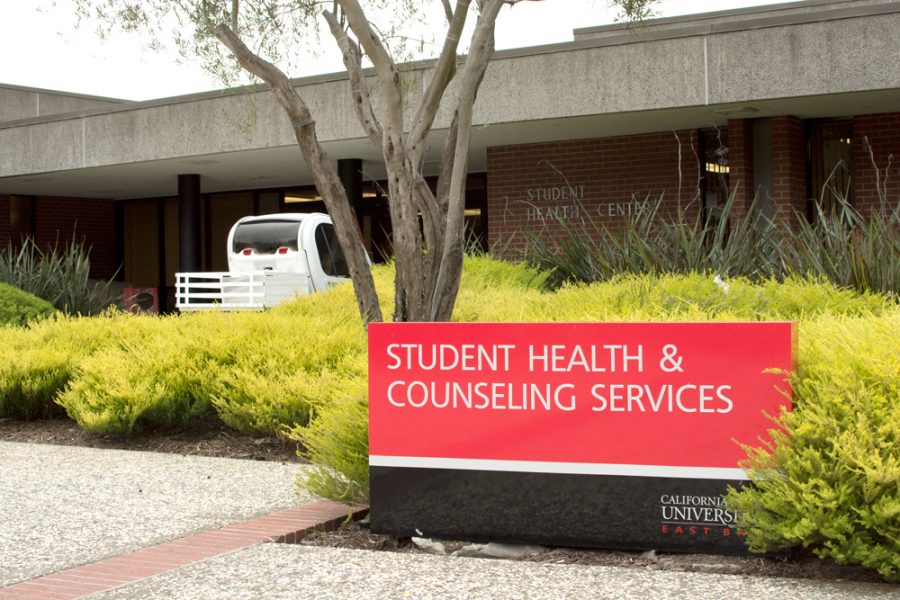
One resource that I am going to talk about in the post is one that focuses on both mental and health care for students. This would be the Student Health and Counseling Services, this is a place where students can get HIV testing, health education, massage therapy, radiology and many more things in which students can benefit from. You can also get treated for anything you have here at the pharmacy. Something I did not know is that they also offer counseling, even though it is in the name of the building I always thought that this facility was just for any medical issues students were having. They offer different counseling sessions that focus on different things like coping skills and also how to deal with any other emotions like stress and anger. Many other things are offered here focusing on different struggles one might have. I think this is something that many students can benefit from but sometimes might not know is available to them. Hopefully students will become more aware of the help they can get through this facility!
Access to locations around my neighborhood

Nordstrom mall entrance; I would say this is pretty accessible for someone with a disability, there is a ramp to enter the store. And parking for them in the front, there is a bus stop and bart across the street but the safest way to get to the entrance would be with car. An elevator is located right by the door once you enter the store to take you to different levels of the store.

Starbucks; parking right in front of the entrance and right next to the ramp to enter the store. Car would be the only way to get to this location since the parking is very cramped. There is no braille sign to indicate it is starbucks so if someone was blind they would need more assistance in order to get to this location.

Target; There is parking in front of the store for them and ramp provided as well. There is no bus nearby so a car would be the only way to get to this location. Bo braille sign so it would be a little hard for someone who is blind to know where they are. Doors open automatically so it would be easy for someone in a wheelchair to enter the store.

Market Place; By my house there is a marketplace where they offer a lot of different food options. It is kind of like a food court, there is no bus nearby so the only way to get here is with a car. The parking is very small so a big vehicle would not be able to get to it. In order to get in you have to go down a little hill but there is disability parking in front and a ramp to enter the market. Also the doors are automatic but there is not braille sign to indicate what it is.
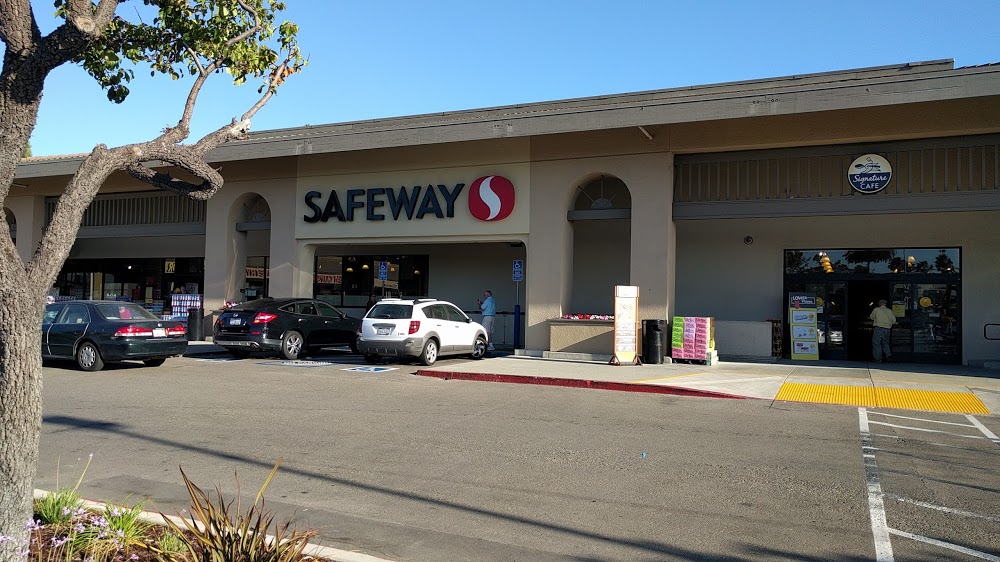
Safeway; There is disability parking right in front of the store, and a ramp to get into the store. The doors are automatic so it would be easy for someone to get in. The only way to get to would be with car, no bus stops are available nearby.
 Esmeralda's Blog